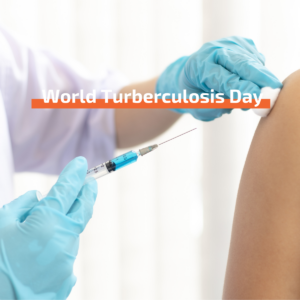
Today March 24th marks World TB Day.
On March 24th 1882, Dr Robert Koch announced to the Berlin Physiological Society that he had discovered the cause of tuberculosis. In 1921, nearly forty years later, the BCG vaccine was discovered by Albert Calmette and Camille Guérin. One hundred and forty-four years after the discovery of the bacillus responsible for TB and over one hundred years since the discovery of the BCG vaccine, people are still dying of TB: 10,7m people were diagnosed with TB and 1,23m people died of TB in 2024 alone.
Often dismissed as a disease confined to developing countries, in early 2026 the WHO warned that certain emerging factors – including armed conflict in Ukraine, forced migration, and antimicrobial resistance – mean that Europe is at growing risk from the disease. 19 200 Europeans died from the disease in 2024 (or one every 27 minutes)[1], and over 204 000 felt sick.[2] Whilst the data shows improvement compared to 2023 (20 400 deaths and 225 000 new cases were recorded in 2023)[3], Europe accounts for one fifth of the global number of multidrug-resistant TB (MDR-TB) in the world[4], despite accounting for only 2.1%[5] of the global disease burden. In 2023, TB infections in children also rose by 10%
With only a 29% reduction in TB cases between 2015 and 2024, Europe has failed to achieve the WHO End TB Strategy target of a 75% reduction by 2025.
TB is both preventable and curable, but the goal of eradicating TB once and for all is in danger. This is mainly due to a stagnation in global funding for prevention, diagnosis, and treatment, but also for R&D (which reached only US$1.2 billion in 2023[6], or 24% of the target set for 2027 among the United Nations’ Member States in the Political Declaration of the 2023 high-level meeting on the fight against tuberculosis[7]). International ODA cuts are also expected to pose a serious challenge, with one study predicting an additional 1,4m cases and 537 700 additional deaths by 2035.
However, the research pipeline has never been more promising, with 18 vaccine candidates undergoing clinical trials, including 6 in the latest development phase before licensing. In addition, global efforts to advance the TB vaccine agenda are supported by the TB Vaccine Accelerator Council[8], launched by the WHO Director-General.
As the EU and its Member States negotiate its new Framework Programme for research (FP10), it is vital that sufficient funds be allocated to solve global challenges, particularly Poverty Related and Neglected Diseases such as TB, which is in urgent need of novel vaccines, diagnostics, and treatments (including for MDR-TB).
[1] Tuberculosis in WHO European Region
[2] Data board: Tuberculosis in WHO European Region
[3] Tuberculosis in the WHO European Region
[4] Tuberculosis in the WHO European Region
[5] Tuberculosis in the WHO European Region
[6] Global gains in tuberculosis response endangered by funding challenges
[7] Political Declaration of the High-Level Meeting on the Fight Against Tuberculosis : resolution / adopted by the General Assembly

 ;
;